
Default to guest checkout with an optional post-purchase account offer, not mandatory registration. That single switch matters because roughly 19% of shoppers abandon their cart when forced to create an account before paying. If you're not sure how your store will react, run an A/B test before committing either way.
TL;DR:
- For first-time buyers and mobile traffic, a guest checkout reduces cart abandonment by avoiding mandatory registration, which accounts for about 19% of lost sales.
- Modern features like autofill, express checkout buttons, and browser-saved payment methods have narrowed the speed gap between guest and account checkouts.
- Requiring accounts makes sense only for subscriptions, wholesale orders, or products that are accessed through membership or SaaS models, where account info is essential.
- A hybrid approach, making guest checkout primary and inviting account creation after the purchase, significantly improves conversion rates and sign-up quality.
- Tracking specific checkout metrics, testing split experience paths, and ensuring technical readiness can optimize and validate this approach effectively.
Table of Contents
- Guest Checkout vs Account: What's Actually Different
- When Guest Checkout Is the Better Choice
- When Requiring an Account Actually Makes Sense
- The Hybrid Approach: Guest-First, Account-Later
- How to Measure What's Actually Working
- Implementation Checklist for Your Checkout
- Why Store Owners Overthink This Decision
- Recovering the Guests Who Still Leave
- Sources
Guest Checkout vs Account: What's Actually Different
Guest checkout lets a shopper buy without creating a password or profile. They enter shipping and payment details once, and that's the end of the relationship, at least on your side. Account checkout asks the shopper to register first, usually with an email and password, in exchange for saved details and order history.
The trade-off comes down to speed versus stickiness. Guest checkout removes friction, especially on mobile, where typing on a small screen already tests anyone's patience. Account checkout front-loads effort but pays off later, when a returning customer breezes through checkout because their card and address are already saved.
Here's where the lines blur:
- Autofill and password managers now handle a chunk of what accounts used to promise, letting return shoppers fill forms in seconds without logging in.
- Express checkout buttons (Apple Pay, Google Pay, Shop Pay) give guests one-tap speed that used to be an account-only perk.
- Browser-saved payment methods mean a "guest" today often checks out faster than a logged-in shopper in 2019.
Accounts still win on order history, subscription management, and loyalty tracking. But for the actual moment of payment, the gap has narrowed a lot.
When Guest Checkout Is the Better Choice
Guest checkout is the right call for first-time buyers, gift purchases, mobile-heavy traffic, and anyone making a one-off buy. These are shoppers with zero investment in your brand yet, and asking them to build a relationship before they've even tried the product is backward.
The abandonment data backs this up hard. Shopify's analysis points to roughly 19% cart abandonment tied directly to forced registration, while PayPal's guest checkout research shows visible, low-friction guest flows measurably lift completion rates. On mobile specifically, usability research finds shoppers expect to be done in under four minutes and bail fast when a signup form gets in the way.
The Cost of One Extra Step: Nearly one in five checkout abandonments trace back to a single decision: requiring an account before purchase.
You don't have to trade marketing data for conversion, though. Here's how to keep both:
- Collect the shopper's email during checkout, not before it, so it's tied to a real order.
- Trigger a post-purchase email sequence that nurtures the relationship without a login wall.
- Layer in retargeting for guests who started checkout but didn't finish, since that abandoned session still carries value.
Guest-first doesn't mean data-blind. It means earning the relationship after the sale, not gatekeeping the sale to get it.
When Requiring an Account Actually Makes Sense
Accounts aren't wrong, they're just situational. A handful of business models genuinely need them:
- Subscriptions and recurring billing require a stored payment method and a way for customers to pause, swap, or cancel plans.
- B2B and wholesale orders often run through approval workflows, custom pricing, and account-level terms that don't exist for one-off retail buyers.
- Products where the account is the product, like a community membership or a SaaS add-on bundled with a purchase, need authentication because access itself is the deliverable.
Even in these cases, you can strip out friction. Passwordless login, single sign-on through Google or Apple, and express payment integrations let you require an account without forcing someone to invent and remember a new password. The account becomes a formality, not an obstacle.
The Hybrid Approach: Guest-First, Account-Later
The strongest pattern in the data isn't guest-only or account-only, it's sequencing them correctly. Make guest checkout the default, then invite account creation once trust is already established.
- Set guest as the visible, primary path. Put a prominent "Checkout as Guest" button above any login prompt, and trim the form to only what's needed to ship and bill.
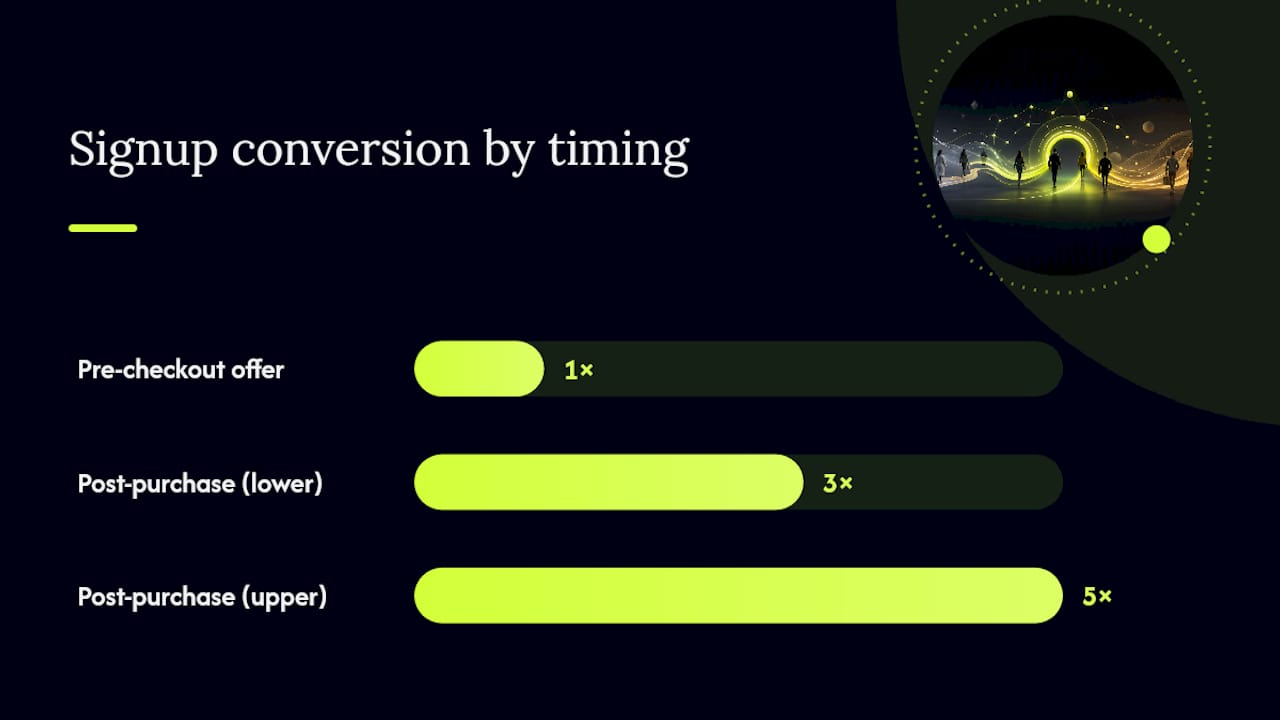
- Ask for the account after the order is placed, not before. UX research shows post-purchase prompts convert 3 to 5 times better than the same offer made pre-checkout, because the shopper has already committed.
- Use a passwordless flow. A magic link or one-click "set your password" tied to the email already on the order removes the mental tax of inventing new credentials.
- Promote express checkout for returning visitors so they get saved-details speed without needing to log in at all.
Pro Tip: Skip "Create an account to track your order." That's a threat, not a benefit. Try "Save your info for a faster checkout next time," paired with one gentle reminder in the shipping confirmation email, never a second nag after that.
This sequencing captures higher-quality signups too. A shopper who creates an account after a good buying experience is a warmer lead than one who registered just to see if you had their size in stock.
How to Measure What's Actually Working
Don't guess. Track these metrics before and after any checkout change:
- Checkout conversion rate, segmented by guest versus account path.
- Average order value (AOV), to see whether one path attracts bigger carts.
- Account opt-in rate on the post-purchase prompt specifically.
- Repeat purchase rate at 30, 60, and 90 days by cohort.
- Fraud rate, since guest orders sometimes need slightly tighter checks.
Run the actual test as required-account versus guest-by-default, split evenly, and give it enough volume to reach statistical confidence, generally a few weeks minimum for a mid-traffic store. Break results out by device, since mobile shoppers react far more harshly to forced registration than desktop shoppers do, and by traffic source, since paid social visitors behave differently than returning email subscribers. For a deeper look at structuring these tests, CRO testing frameworks built for e-commerce checkout specifically are worth borrowing from.
Implementation Checklist for Your Checkout
Getting this live takes less engineering than most teams expect:
- Set account creation to optional in your checkout settings, guest first.
- Cut form fields to the minimum needed to fulfill the order.
- Turn on express payment options like Apple Pay, Google Pay, and Shop Pay.
- Build the post-purchase account prompt into your order confirmation email.
- Add basic fraud screening for guest orders, since you lose some of the signal an account history provides.
- Confirm your analytics are tracking both paths separately before you flip the switch.
| Action | Why It Matters |
|---|---|
| Guest CTA above login | Reduces the ~19% abandonment tied to forced registration |
| Minimal checkout fields | Cuts mobile drop-off directly |
| Post-purchase account prompt | Converts 3 to 5 times better than pre-checkout asks |
| Express payment buttons | Gives returning shoppers account-like speed without login |
| Segmented analytics | Confirms the change actually improved conversion |
Small technical issues undercut all of this too. An expired SSL certificate, for instance, can quietly kill checkout trust and sales regardless of how well your guest flow is designed, so it's worth checking that box before you launch anything else.
Why Store Owners Overthink This Decision
Most stores treat guest checkout and accounts as a philosophical choice about customer relationships. It isn't. It's a sequencing problem, and the data is pretty consistent about which sequence wins.
What gets missed is that the account itself was never really the goal. Order history, saved addresses, and loyalty points are retention tools, and retention only matters if the first sale happened. Store owners who require accounts upfront are optimizing for a repeat customer they don't have yet, at the direct expense of the first-time buyer standing right in front of them. Build retention through smart post-purchase touchpoints instead, and you get both: the sale now, and the relationship later.
There's a bigger blind spot too. Even a well-built guest checkout only helps the shoppers who reach it. Most visitors leave before ever entering payment details, which is a browsing and consideration problem, not a checkout problem. That's exactly where tools like StorePush earn their place, catching the anonymous majority who never gave you an email to retarget in the first place.
— Lucas
Recovering the Guests Who Still Leave
Even a perfectly optimized guest checkout won't stop most visitors from leaving before they buy anything. There are tools that send push notifications straight to a shopper's lock screen using native iOS App Clips, no email, no phone number, and no app install required, which means you can re-engage guest shoppers you'd otherwise have zero way to contact.
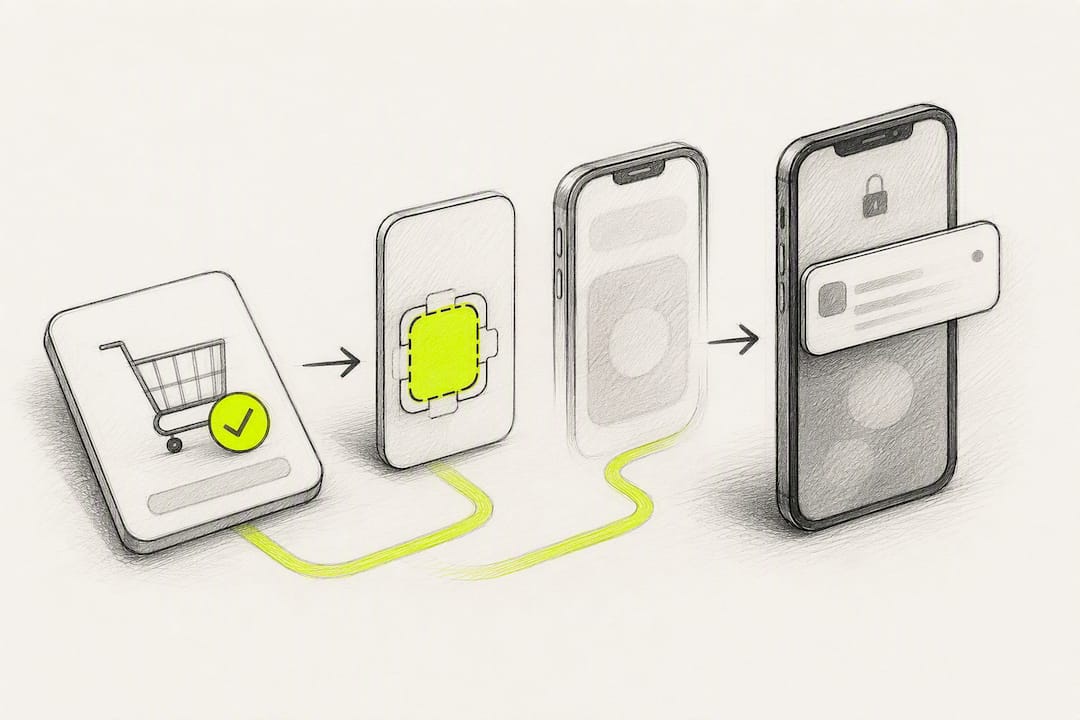
That matters because guest-first checkout, by design, means you often don't capture contact details until the order is placed, if at all. Such tools can help recover the abandonment that happens before that point, working alongside your guest checkout rather than against it. If you want to see what that recovery lift actually looks like on your own traffic, book a demo with StorePush and start measuring it directly.
Sources
- How to reduce shopping cart abandonment by optimizing the checkout | Shopify
- Guest checkout vs account creation: the data | Uxitt
- Guest Checkout: Drive e-commerce conversion | PayPal US