
Privacy-friendly retargeting runs on three pillars: owned first-party data, server-side conversion APIs, and contextual or attention-based channels. Browser privacy APIs and consent modeling support that foundation, but they don't replace it. If you do nothing else this quarter, audit what customer data you actually own and route your conversion events server-side. That single move recovers more signal than almost any other fix on this list.
TL;DR:
- Auditing customer data ownership and routing conversion events server-side can recover significantly more measurement signal with minimal effort.
- Building and activating first-party lists from logged-in identifiers and behavioral signals are crucial for effective cookieless retargeting.
- Implementing server-side tracking and integrating it with conversion APIs fixes most measurement gaps caused by reduced browser tracking.
- Contextual and attention-based targeting provide effective, privacy-friendly re-engagement channels that do not rely on personal identifiers.
- Push-based cart recovery via native iOS App Clips offers a privacy-first method to re-engage visitors who leave without providing contact details.
Table of Contents
- Why Privacy-Friendly Retargeting Matters Now
- Building First-Party Data You Can Actually Activate
- Recovering Signal With Server-Side Tracking
- Contextual and Attention-Based Re-Engagement
- What Protected Audience, FLEDGE, and Topics Actually Do
- Measuring What You Can't Track Directly
- How to Move Your Retargeting Stack to Privacy-First
- Where Push-Based Cart Recovery Fits the Privacy-First Stack
- Budgeting Across Owned Channels and Walled Gardens
- Evaluate StorePush for Cookieless Cart Recovery
- Sources
- FAQ
Why Privacy-Friendly Retargeting Matters Now
Third-party cookies aren't dying quietly. Safari has blocked them by default since 2020, Firefox followed with Enhanced Tracking Protection, and Chrome's Privacy Sandbox is steadily phasing out cross-site tracking in favor of on-device alternatives. On mobile, Apple's App Tracking Transparency framework already forces an opt-in prompt before any app can access the IDFA, and most users decline it. That single change quietly wiped out a huge chunk of iOS retargeting reach almost overnight.
The regulatory pressure compounds the technical shift. GDPR enforcement in the EU and CCPA-driven lawsuits in California both increasingly target invisible cross-site tracking specifically, not just data breaches. Ad tech companies that quietly fingerprint or stitch identities across sites without clear consent are the ones drawing regulatory attention and class-action interest.
For marketers running paid media, the business impact shows up in three concrete ways:
- Shrinking reach. Retargeting pools that once numbered in the hundreds of thousands shrink as browsers and app permissions cut off tracking.
- Measurement gaps. Conversion tracking that depended on client-side pixels now misses conversions it used to catch cleanly.
- Attribution drift. Multi-touch attribution models built on cookie-based journeys increasingly misattribute credit, making budget decisions less reliable.
None of this means retargeting is dead. It means the mechanics changed, and the marketers who adapted fastest built pipelines around data they own instead of data they borrow.
Building First-Party Data You Can Actually Activate
Your own customer list is the one asset no browser update or platform policy can take away. The practical work is deciding what to collect, how to prepare it, and how to get more people to hand it over willingly.
Prioritize these signals, roughly in order of retargeting value:
- Logged-in identifiers from account creation or loyalty programs, since these tend to have the highest match rates on ad platforms.
- Email and phone number, hashed before upload, from checkout, newsletter signups, or SMS opt-ins.
- Behavioral signals like product views, cart adds, and category browsing, tied to a first-party cookie or session ID you control.
- Purchase history, which platforms use to build lookalike and value-based audiences far more accurately than generic pixel data.
Before any list reaches an ad platform, hash it with SHA-256 and confirm your consent management platform gated the collection properly. Cookieless retargeting depends on exactly this kind of hashed, consented identifier being matched inside the platform's clean environment rather than tracked across sites in the open.
Once the list is clean, activate it through Customer Match on Google, Custom Audiences on Meta, or a shared clean room if you're working with a retail media network. Growing that list matters as much as activating it. Offer a real value exchange, early access, a loyalty discount, size guides gated behind an account, rather than a generic "subscribe for updates" popup that nobody trusts anymore.
Pro Tip: *Treat your email list size as a KPI on the same dashboard as ROAS.
Recovering Signal With Server-Side Tracking
Client-side tags fire from the visitor's browser and depend on that browser cooperating, loading the script, allowing the cookie, not blocking the pixel. Server-side tagging moves that job to a server you control, which forwards clean, consistent events to ad platforms regardless of what the browser does. It's the single biggest lever for closing the measurement gap this year.
The architecture usually looks like a server container, often Google Tag Manager's server-side variant, sitting between your storefront and the ad platforms, enriching each event before it goes out.
Three integrations do most of the heavy lifting:
- Google's Enhanced Conversions, which layers hashed customer data onto existing conversion tags to improve match rates without new tracking.
- Meta's Conversions API (CAPI), which sends web events server-to-server, recovering conversions that browser-based pixels miss entirely.
- TikTok's Events API, built on the same server-to-server logic for advertisers running acquisition and retargeting on that platform.
Each of these needs a consistent data schema: hashed email, hashed phone, order value, event timestamp, and a stable identifier tying the event back to the original session. Skip that identity stitching step and your match rates collapse even with a technically perfect server-side setup, since the platform has no reliable way to connect the event to a known user.
Consent handling has to run ahead of all of it. No event should leave your server carrying personal identifiers unless your consent management platform confirmed the visitor opted in. Building this correctly on Shopify's add-to-cart tracking is a good template for getting the event structure right before you scale it across platforms.
Pro Tip: Run server-side and client-side tags in parallel for two weeks before fully cutting over. Comparing conversion counts between the two catches schema errors before they cost you attributed revenue.
Contextual and Attention-Based Re-Engagement
Contextual targeting today isn't the crude keyword matching from a decade ago. Modern contextual engines read page content, sentiment, and semantic categories in real time, placing ads next to content that's actually relevant without touching a single personal identifier. It works especially well for re-engagement when you can't rely on a cookie to say "this person visited us," but you know your audience reads certain publications, watches certain content genres, or browses certain product categories.
Attention and ad-reward networks take a different angle. Instead of tracking who a user is, they measure whether an ad actually got looked at, dwell time, viewport visibility, interaction, and reward publishers and advertisers for genuine engagement rather than raw impressions. They're worth piloting as a complement, not a wholesale replacement, since the reach tends to be narrower than programmatic display.
Practical ways to combine both with what you already own:
- Run contextual campaigns against content categories that mirror your best-converting first-party segments, like cooking sites for a kitchenware brand.
- Pilot one attention network with a small, capped budget and compare cost-per-engaged-view against your standard display baseline.
- Layer contextual placements around abandoned-cart recovery windows, since a shopper reading a relevant article 48 hours after abandoning a cart is a warmer audience than a cold contextual impression.
None of this needs personal data to work, which is exactly the point.
What Protected Audience, FLEDGE, and Topics Actually Do
Chrome's Privacy Sandbox replaced the shelved FLEDGE proposal with the Protected Audience API, which runs remarketing-style auctions inside the browser itself instead of on an ad server. Interest groups, cohorts of intent signals like "recently viewed running shoes", live inside the browser and never leave it. When a new page loads, an on-device auction runs using code sandboxed in what Google calls worklets, and only an anonymized, delayed report reaches advertisers through mechanisms like fenced frames.
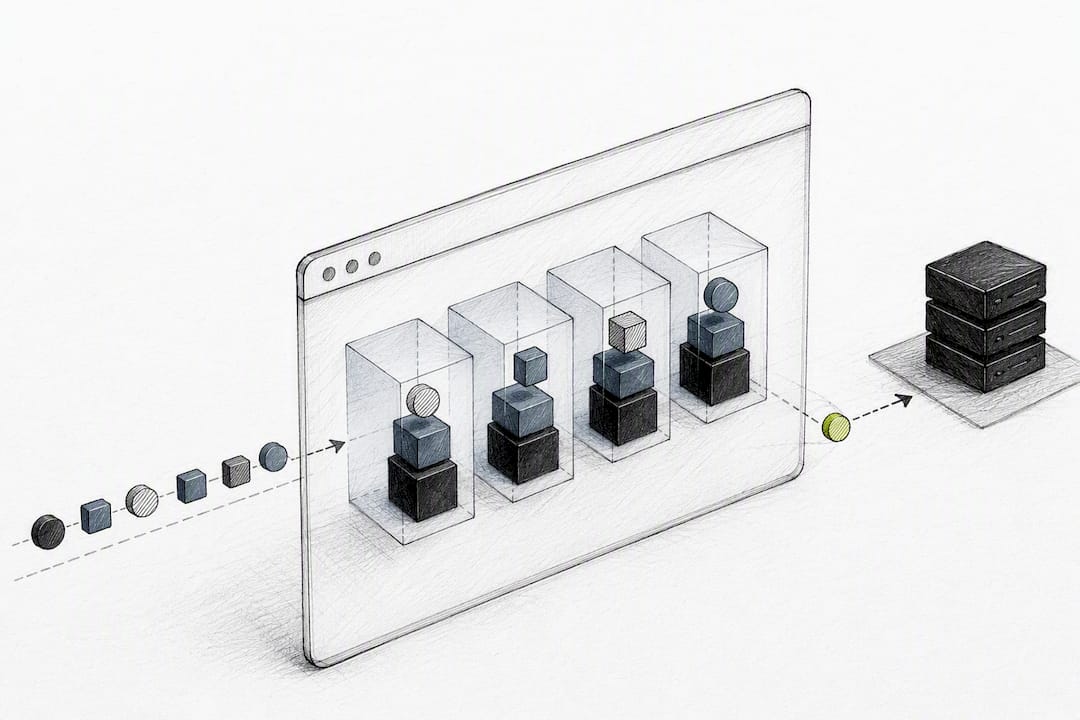
The original TURTLEDOVE proposal that Protected Audience evolved from was explicit about the tradeoff: privacy guarantees come at the cost of real-time flexibility.
That tradeoff shows up in three practical constraints:
- Interest groups typically expire after roughly one month, capping how long a re-engagement window can stay active without a fresh site visit.
- Reporting is aggregated and delayed, so real-time bid optimization the way you're used to with third-party cookies isn't available.
- Key/value services, the infrastructure that supplies real-time pricing and creative data to the on-device auction, need separate setup work from your ad tech or platform partner.
Preparing for this means talking to your publisher and platform partners now about K/V service support, packaging creative assets for fenced-frame rendering, and treating any Protected Audience pilot as a long-tail addition to your stack rather than your primary channel this year.
Measuring What You Can't Track Directly
Attribution without cookies means accepting that user-level joins across every touchpoint are gone for good in most cases, and building measurement that doesn't need them. Data clean rooms solve the case where you need to match your customer list against a platform's audience without either side exposing raw identifiers. Clean rooms work well for retail media partnerships and co-op campaigns where both sides have real first-party data to join.
Aggregate reporting APIs, the kind Protected Audience and similar frameworks expose, fit a different case: campaign-level performance summaries where you don't need to know which specific user converted, only that a cohort did.
For most accounts, the practical stack combines:
- Conversion modeling through Consent Mode v2, which estimates conversions from users who declined cookies based on patterns from users who consented, keeping bidding algorithms informed even with partial data.
- Incrementality testing, holding out a geographic or audience segment from a campaign to measure true lift rather than assumed attribution.
- Aggregate platform reporting for channel-level performance, paired with clean-room joins for any partnership requiring cross-party matching.
A quick troubleshooting checklist when conversion numbers look off: check whether consent rates dropped, confirm server-side events are still enriched with hashed identifiers, and run a fresh incrementality test before assuming the campaign itself underperformed.
How to Move Your Retargeting Stack to Privacy-First
Sequencing matters more than any individual tactic here. Do this roughly in order:
- Audit every tag and data flow currently running on your site, and flag anything relying purely on third-party cookies.
- Deploy a consent management platform with Consent Mode v2 so conversion modeling has clean signal to work from.
- Stand up server-side tagging and connect Enhanced Conversions, CAPI, and any Events API relevant to your platform mix.
- Build and hash your first-party identifiers, then upload them to Customer Match, Custom Audiences, or a clean room.
- Pilot one contextual campaign and one attention network with capped budgets to establish a baseline.
- Run an incrementality test on your top campaign and reallocate budget based on actual lift, not assumed attribution.
Pro Tip: Don't try to do all six steps at once. Server-side tagging alone typically takes two to four weeks to implement correctly, and rushing the identity-stitching step is the most common way match rates fall apart.
The full cookieless retargeting playbook covers the platform-by-platform setup details if you want the deeper technical reference alongside this sequence.
Where Push-Based Cart Recovery Fits the Privacy-First Stack
Most retargeting still assumes you captured an email or phone number before the visitor left. StorePush works around that assumption entirely. It uses native iOS App Clips to send a push notification directly to a shopper's lock screen after they abandon a cart or browse without buying, no email, no phone number, no app install required. That makes it a genuine complement to the pillars above rather than a substitute: your first-party list still handles email and paid retargeting, while push recovery catches the majority of visitors who never gave you an identifier at all.
It integrates directly with popular e-commerce platforms and custom storefronts, with dashboard analytics for revenue attribution and funnel tracking built in.
Before adopting any tool in this category, check:
- Integration effort against your current stack and checkout flow
- Whether the privacy model actually avoids collecting personal identifiers, not just avoids third-party cookies
- How transparent the attribution reporting is on recovered revenue
- What outcome range is realistic given your current cart abandonment rate
Budgeting Across Owned Channels and Walled Gardens
Owned-audience channels give you control and compounding value over time. Walled gardens like Meta and Google give you reach you can't replicate on your own, because authenticated users inside those platforms remain a reliable, compliant targeting pool. Most mid-size e-commerce brands do best splitting spend roughly two-thirds toward platform-native retargeting and one-third toward first-party activation and contextual pilots, shifting that ratio toward owned channels as the list grows. Scale a pilot once it beats your platform baseline on incrementality, not just on cost-per-click.
— Lucas
Evaluate StorePush for Cookieless Cart Recovery
Everything in this playbook, first-party data, server-side APIs, contextual pilots, assumes you already captured some kind of identifier. Because it runs through native iOS App Clips rather than tracking cookies or requiring app installs, it fits directly into a privacy-first stack instead of working around it. If you're running Shopify, WooCommerce, or BigCommerce and want to see how push-based recovery performs against your current abandonment rate, book a demo or check the full feature breakdown on the StorePush product page to see if it fits your evaluation checklist.
Sources
For the technical mechanics behind on-device auctions, read Google's own Protected Audience API documentation. For the academic case that privacy-preserving retargeting is technically viable, see this research paper on client-retargeter computation splitting. For a broader industry view of the cookieless stack, the 2026 cookieless advertising playbook is a solid reference, alongside this primer on audience targeting fundamentals.
FAQ
What Is Privacy-Friendly Retargeting?
It's re-engaging past visitors using owned first-party data, server-side conversion APIs, and contextual or on-device signals instead of cross-site cookie tracking.
Can You Retarget Without Third-Party Cookies?
Yes. Hashed first-party identifiers, server-side conversion APIs like Meta's CAPI, and browser-native tools like Protected Audience all support retargeting without cross-site cookies.
How Does Retargeting Work Without an Email or Phone Number?
Options like StorePush use native iOS App Clips to deliver push notifications straight to a shopper's lock screen after cart abandonment, with no email, phone number, or app install needed.
What Is Consent Mode and Why Does It Matter for Retargeting?
Consent Mode v2 lets platforms model conversions for users who decline cookies, preserving measurement and bidding accuracy without collecting identifying data from those users.
Are Clean Rooms Necessary for Small E-Commerce Brands?
Not usually. Clean rooms make the most sense for retail media partnerships and co-op campaigns; smaller brands typically get more value from server-side tagging and first-party list growth first.