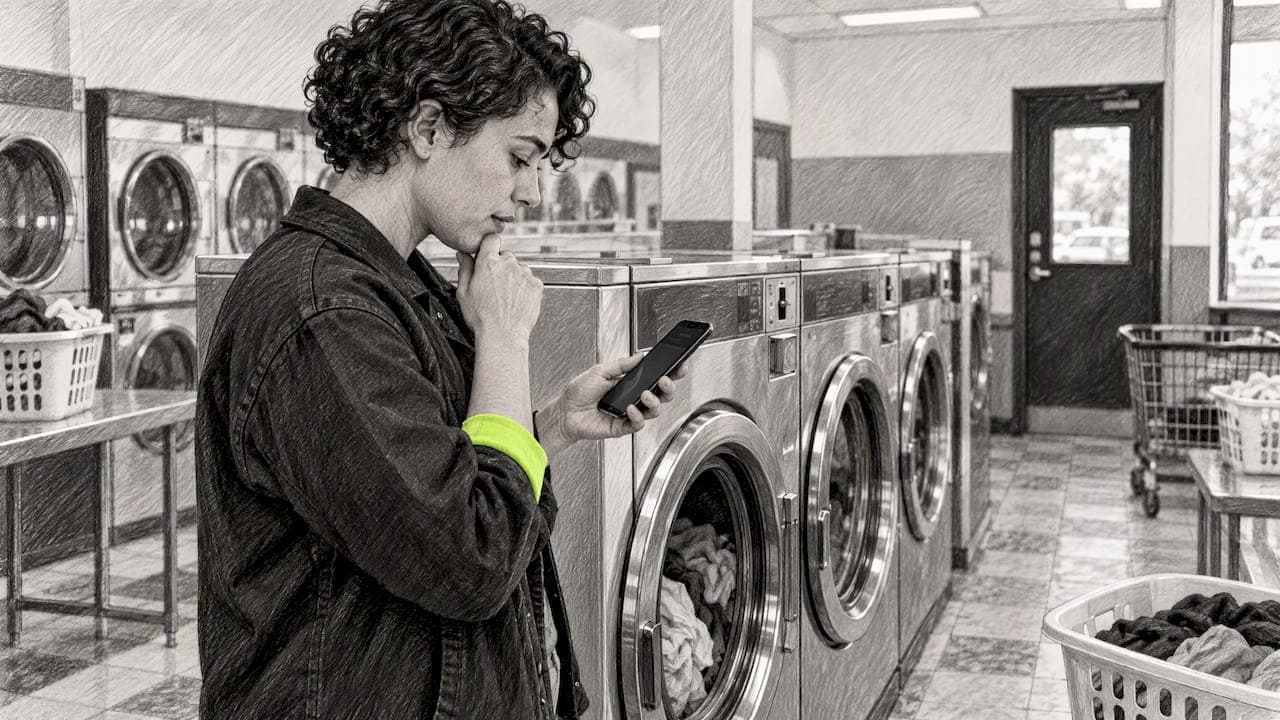
You paid for every one of those clicks, and most of the shoppers who added something to a cart still walked away. To recover carts from paid traffic, do four things: fix the friction that made them leave, follow up fast through more than one channel, keep your retargeting audiences clean, and measure incrementality instead of trusting platform-reported ROAS. This guide walks through each, with the numbers and the traps.
TL;DR
- The average cart abandonment rate is 70.22% (Baymard), so most of your ad spend lands on people who leave without buying.
- Email and retargeting ads only reach shoppers you can identify or cookie. Push to the lock screen reaches the ones who never gave you an email or phone number.
- Speed matters: up to 45% of recoveries happen in the first two hours.
- Platform dashboards over-credit recovery. Use a holdout group to find the real lift.
Table of Contents
- Why paid traffic is the hardest traffic to recover
- Step 1: Remove the reasons they left
- Step 2: Follow up fast, and on more than one channel
- Step 3: Build retargeting audiences that do not waste money
- Step 4: Reach the shoppers who never identified themselves
- Step 5: Measure real recovery, not attributed recovery
- Our perspective: reach first, then optimize
- Try push recovery on your paid traffic
- A practical weekly routine
- FAQ
- Sources
Why paid traffic is the hardest traffic to recover
Paid visitors are cold, expensive and impatient. They clicked an ad, often on a phone, often while doing something else. A good share of them never reach a login or email field, which means your classic abandoned cart flow has nobody to write to.
That creates a gap. Your acquisition cost is already spent, your cart recovery tool only sees the minority who identified themselves, and the rest vanish. If you want a deeper take on why this happens, our post on why cart abandonment is a browsing problem, not a checkout problem covers it.
The size of the prize is not small. Baymard also estimates that $260 billion in lost orders is recoverable in the US and EU through better checkout flow and design alone.
Step 1: Remove the reasons they left

Before you pay to chase anyone, check what pushed them out. Recovery is a patch. Prevention is cheaper.
According to Cartylabs' 2026 roundup, the main drivers are:
- 48% cite extra costs (shipping, taxes, fees) that are too high
- 24-26% cite forced account creation
- 18-22% cite a checkout that is too long or complicated
The same source says addressing those three can recover roughly 70% of abandoned carts. Treat that as a directional claim, not a promise. Other analysts note that showing total cost early and offering guest checkout often yields conversion gains of 3-8%.
For paid traffic, three fixes pay off first:
- Match the ad promise to the landing page. If the ad says free shipping, the product page should say it too.
- Show the full price early. Put shipping and tax estimates on the product page, not at the last step.
- Make guest checkout the default. Paid visitors do not owe you an account.
Speed counts here as well. A slow product page loses the shopper before the cart exists. If your store runs on Shopify, this overview of caching plugins for Shopify stores is a useful place to start on page load.
Step 2: Follow up fast, and on more than one channel
Intent decays quickly. The Dotdigital data suggests up to 45% of cart recoveries happen within two hours of abandonment, and that combining push, SMS and email can lift recovery rates by up to 45% over single-channel efforts.
Here is how the main channels compare for paid traffic:
| Channel | Needs from the shopper | Reach among paid visitors | Main weakness |
|---|---|---|---|
| Email sequence | Email address | Only those who typed one | Buried in a Gmail tab, or in spam |
| SMS | Phone number and consent | Only those who shared it | Even fewer opt in |
| Retargeting ads | Cookie or pixel signal | Those who consent and are trackable | Privacy changes erode the audience |
| Lock screen push via App Clips | No email, no phone, no app install | Shoppers who launch the App Clip | iOS-specific |
The point is not that one channel wins. It is that each channel covers a different slice of the 90%+ who leave. Email is still worth running, and Cartylabs' benchmarks put a three-message email sequence at 8-15% of abandoners recovered, with higher ranges when SMS is added.
Step 3: Build retargeting audiences that do not waste money
Retargeting is the default answer for paid traffic, and it is where much of the money leaks. Two habits matter most.
Exclude people who already bought
Many stores build an audience from everyone who added to cart. Some of those people would have returned through email, organic search or a direct visit anyway, and others have already checked out. Cartylabs advises excluding active customers and completed purchasers so you do not pay for conversions you had already won.
Keep your product feed honest
Dynamic product ads can remind shoppers of what they left behind. One practitioner guide starts with three checks: matching product IDs, current prices and stock, and purchaser exclusions. An ad that shows an out-of-stock item or a stale price burns budget and trust at once.
Expect a shrinking audience
Tracking is getting harder. Experts point to Consent Mode v2 and browser restrictions making legacy remarketing pixels less reliable, and recommend server-side tracking such as Meta's Conversions API plus first-party data. If consent signals are not passed correctly, you can lose the remarketing audience entirely. We cover the broader picture in our cookieless retargeting playbook.
Step 4: Reach the shoppers who never identified themselves
This is the group traditional tools cannot touch. They clicked, browsed, added to cart and left, and you hold no email, no phone, and often no usable cookie.
Apple App Clips offer a route. According to Apple's developer documentation as summarized on Sosumi, an App Clip can send ephemeral notifications for up to 8 hours after launch, with no full app install and no long-term push permission. That window lines up well with the early hours when recovery is most likely.

This is the mechanism StorePush builds on. A shopper who opens your storefront's App Clip can get a push on the lock screen about the cart they left, without handing over contact details. If you want the technical rules, see our guide to abandoned checkout push without email and the post on an add-to-cart push trigger for anonymous shoppers.
What to say in the push
Keep it short and specific. Name the product, not "your cart." Add one reason to return: low stock, a restock, or a reminder of free shipping. You do not always need a discount. Margin matters on paid traffic, where acquisition cost is already high, and we show how in recovering carts without discounts.
When to send
Start inside the first couple of hours, then space follow-ups out. Timing should shift with order value, because a $30 impulse buy and a $400 considered purchase do not behave alike. We tested this in our 72 hour abandoned cart timing study.
Step 5: Measure real recovery, not attributed recovery
This is where paid-traffic recovery most often goes wrong. Shoppers return through email, organic search or a direct visit, but the retargeting platform claims the sale because it showed an ad earlier. Metricuno's operator guide warns that relying on platform-reported ROAS can lead to overspending and recommends Google or Meta Conversion Lift studies to compare randomized treatment and control groups.
A simpler version is a holdout test:
- Exclude 20-30% of your cart abandoner audience from recovery messages.
- Run the test for 4-6 weeks.
- Compare purchase rates between the exposed and held-out groups.
- The gap is your true lift. Judge spend against that, not against raw attribution.
The same logic applies to any channel, push included. As the PPC Marketing Hub guide puts it, ad-attributed sales alone do not prove the ads caused them. For a calculation walkthrough, our 2026 recovery benchmarks start from the 70.22% baseline.
Our perspective: reach first, then optimize
Most cart recovery advice assumes you already have the shopper's email. For paid traffic that assumption is the problem. You buy a click, the visitor adds to cart, and unless they type an address into a pop-up, your recovery stack has nothing to work with.
So we start from reach. Before you tune subject lines or test a third email, ask what share of your abandoners you can contact at all. If the answer is a small minority, the biggest gain is not a better message to the same people. It is a way to reach the people you currently cannot.
That is why we built StorePush on App Clips: a lock screen push needs no email, no phone number and no app install. And because we know how easily recovery gets over-credited, we built revenue attribution, funnel tracking and event-based triggers into the dashboard, so you can pair them with a holdout test and see what is really incremental.
One honest note: push is one layer, not a replacement. Keep your email flow, keep your retargeting ads clean, and add the channel that reaches the shoppers those two miss.
— Lucas
Try push recovery on your paid traffic
StorePush works with Shopify, WooCommerce, BigCommerce and custom storefronts. Plans start with a Free tier at $0 per month. Pro is $50 per month, and there is a 5% usage commission on attributed recovered revenue. You can see the details and start on the StorePush homepage.
A practical weekly routine
If you run paid campaigns, this routine keeps recovery honest:
- Monday: check cart-to-checkout and checkout-to-order drop-off by campaign, not just site-wide.
- Wednesday: audit retargeting exclusions and feed accuracy (price, stock, purchasers).
- Friday: review recovery by channel, and compare against your holdout group.
- Monthly: revisit the three friction drivers: extra costs, account creation, checkout length.
If you want the psychology behind why people stall, our piece on abandoned cart psychology is a good companion.
FAQ
What is a good recovery rate for abandoned carts?
It depends on the channels and your audience. Cartylabs' 2026 benchmarks for Shopify stores put a three-message email sequence at 8-15% of abandoners recovered, and higher ranges when SMS is added. Measure against a holdout group so you know how much was truly incremental.
Can I recover carts when I have no email address?
Yes, though not with email. Retargeting ads work only for trackable, consenting visitors, so a lock screen push through an iOS App Clip is another route. As Sosumi's summary of Apple's documentation explains, App Clips can send notifications for up to 8 hours after launch without a full app install.
Why does my ad platform report more recovered sales than my store does?
Because of last-click style attribution. Many shoppers come back through email, organic search or direct visits, and the ad platform still claims the sale. A holdout or Conversion Lift test, as Metricuno describes, shows the incremental number.
Should I offer a discount to recover paid-traffic carts?
Not by default. Many shoppers leave over extra costs, forced accounts or a long checkout, and fixing those costs less than a coupon. Test a no-discount reminder first, then reserve offers for high-value or repeat-hesitation carts.
Sources
- How To Reduce Shopping Cart Abandonment (2026), Shopify
- Shopify Checkout Abandonment Statistics 2026, Cartylabs
- 7 strategies to boost ecommerce sales with abandoned cart recovery, Dotdigital
- Cart Abandonment: Rate, Causes, GA4 Tracking & Recovery 2026, ACCS
- Cart Recovery Retargeting Ads: The Operator's Guide, Metricuno
- Dynamic Product Ads: Cart Recovery Guide, PPC Marketing Hub
- Meta Ads vs Google Ads retargeting in 2026: privacy changes
- Enabling notifications in App Clips, Sosumi